
Hyderabad: India set the global tone for patient safety leadership on Day 1 of the International Health Dialogue 2026, as clinicians, policymakers, accreditation experts, and healthcare leaders from India and across the world convened in Hyderabad to advance a shared vision for safer, more equitable healthcare systems.
The opening day of International Health Dialogue 2026, themed “Global Voices. One Vision.”, positioned patient safety as a leadership and governance priority, underpinned by equity and responsible digital transformation.
Discussions highlighted how India’s experience in delivering healthcare at scale – while steadily strengthening standards, accountability, and outcomes – is increasingly shaping global thinking on patient safety and trust.
Also Read: Apollo Hospitals Pune Launches 400-Bed Quaternary Care Facility
International Health Dialogue 2026 Opens with Focus on Shared Learning and Global Collaboration
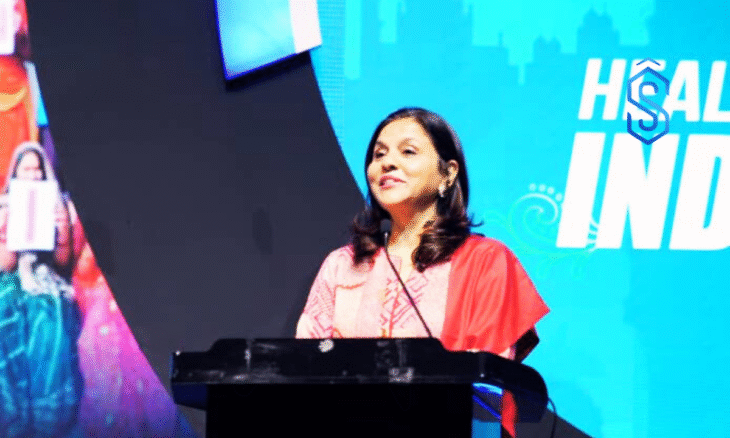
In her inaugural address, Dr Sangita Reddy, Joint Managing Director, Apollo Hospitals Group, recalled the founding purpose of the International Health Dialogue as a platform for open knowledge exchange across healthcare systems.
She emphasised that innovations and learnings within hospitals must move beyond individual ecosystems to benefit the global healthcare community.
Reflecting the expanding international relevance of International Health Dialogue 2026, Dr. Reddy noted that the conference received over 5,000 registrations, more than 300 paper submissions, and 120-plus award entries from over 75 institutions worldwide.
Equity-Centred Design Emerges as Core Patient Safety Imperative
Setting the direction for real-world impact, Dr Jayesh Ranjan, Special Chief Secretary for the Industries & Commerce and Information Technology Departments, Government of Telangana, stressed the need to embed equity at the core of patient safety frameworks.
He underscored that patient populations are not homogeneous and that safety solutions must be designed for the most vulnerable, accounting for access, continuity of care, and real-life behaviours.
Addressing digital inclusion, Dr. Ranjan observed that the digital divide extends beyond infrastructure and often reflects deeper mindset gaps, reinforcing the need for thoughtful, inclusive digital transformation in healthcare.
Also Read: ASSICON 2026: Pune Hosts Over 1,200 Spine Surgeons from India and Abroad
International Health Dialogue 2026 Highlights Leadership Accountability for Patient Safety
A recurring theme throughout Day 1 of International Health Dialogue 2026 was the need for coordinated action across the healthcare ecosystem.
In the opening plenary, Dr Madhu Sasidhar, President and CEO, Hospitals Division, Apollo Hospitals Enterprise Limited, emphasised that patient safety is an organisational leadership responsibility rather than a departmental function.
He highlighted the importance of collaboration among regulators, governments, accreditors, providers, and technology partners to achieve sustainable safety outcomes.
Shift from Reactive Care to Prevention and Measurable Outcomes
Speakers across sessions reinforced the urgency of transitioning from reactive care models to preventive, outcome-driven approaches.
Dr. Sangita Reddy pointed to the rising global healthcare demand, noting that exponential challenges cannot be addressed with linear solutions. Discussions linked this challenge to stronger prevention strategies, disciplined use of digital tools, and clearer outcome measurement.
From a global accreditation perspective, Dr Carsten Engel, CEO of the International Society for Quality in Health Care (ISQua), cautioned against procedural overload that fails to deliver meaningful safety improvements.
He advocated for a systems-based understanding of behaviour and context, urging leaders to focus on why actions made sense within existing systems rather than assigning blame.
International Health Dialogue 2026: Standards, Implementation, and Zero Harm Vision
Emphasising execution over intent, Dr Atul Mohan Kochhar, CEO of the National Accreditation Board for Hospitals & Healthcare Providers (NABH), described patient safety as a moral, social, and economic imperative.
He highlighted that policies alone are insufficient without strong implementation efficiency and reaffirmed that zero harm should remain the only acceptable benchmark for patient safety risk.
Apollo Signs MoU to Advance AI-Enabled Clinical Decision Support
Building on the focus on implementation and measurable outcomes, Apollo Hospitals signed a Memorandum of Understanding with Roche Diagnostics India on Day 1 of International Health Dialogue 2026.
The collaboration will explore the integration of advanced artificial intelligence into clinical decision-making, with an emphasis on clinician-friendly tools, early risk identification, consistency in judgement, and safer care delivery at scale.
Also Read: Pune: Ruby Hall Clinic Partners with Emoha Eldercare to Strengthen Elder Care Ecosystem
Culture, Technology, and Collective Learning Drive Safety Transformation
Dr Rohini Sridhar, Chief of Medical Services, Apollo Hospitals, highlighted the importance of culture-led transformation, noting that zero harm can only be achieved when clinicians and organisations move together.
She stressed that while technology accelerates learning, organisational culture ultimately determines action and adoption.
Later in the day, International Health Dialogue 2026 hosted a spotlight session for newly launched digital health startups, featuring curated pitches to investors.
The session focused on practical solutions addressing real clinical and operational gaps, including safer workflows, decision support, early risk detection, improved documentation, and scalable patient engagement.
The opening day reinforced IHD’s emphasis on translating innovation into validated, implementable tools that strengthen patient safety, outcomes, and trust.
International Health Dialogue 2026 continues on January 31 in Hyderabad with further sessions focused on patient safety, digital transformation, healthcare operations, and clinical learning.